
AI Ethics: Balancing Innovation and Responsibility

As cloud migration accelerates and AI automation becomes more embedded in daily operations, datacenter energy consumption is expected to increase, at least in the near term. For instance, Microsoft's emissions in 2024 reached 15.4 million metric tons of CO₂e, a 24% increase from its 2020 baseline. Google's emissions in 2023 increased with 48% vs 2019 baseline, reflecting a larger trend among big tech companies in general.
Decarbonization and Emissions for Dummies
We'll start by introducing essential terms in decarbonization. Companies organize emissions into three main buckets:
- Scope 1 emissions: direct emissions from sources a company owns or controls, such as fuel for company vehicles, or industrial processes. These emissions originate directly from a company's operations.
- Scope 2 emissions: indirect emissions from purchased energy, like electricity. Companies can lower Scope 2 emissions by transitioning to renewable energy.
- Scope 3 emissions: indirect emissions from a company's supply chain, both upstream and downstream, covering activities like purchased goods, transportation and waste disposal.
Building a datacenter, including materials like concrete, steel, plastics, and copper, contributes to Scope 3 emissions, whereas the electricity used during its operation is categorized under Scope 2. For major technology companies, Scope 3 emissions typically make up 70–90% of their total emissions. In Microsoft's case, Scope 3 accounts for 96% of their total emissions. Addressing Scope 3 emissions is crucial for achieving net-zero targets by 2030.
The Scope 2 emissions, attributed to operating a datacenter can be reduced by transitioning to 100% renewable energy. However, not all locations have direct access to renewable sources. In these cases, companies can utilize Power Purchase Agreements (PPAs) and Renewable Energy Certificates (RECs) to offset their energy consumption and support renewable energy production.
This IEA report uses new data and modeling to project AI's future power demand, sources of supply, and impacts on security, emissions, and costs.
PPAs, RECs, and Carbon Credits
In order to reduce Scope 2 emissions, companies typically will set an 100% renewable energy matching target in the short to medium term. These targets can be achieved by procuring Power Purchase Agreements (PPAs) and Renewable Energy Certificates (RECs). While these instruments contribute to supporting renewable energy and emission reduction projects, over-reliance on them can be seen as an easier, less impactful way to achieve net-zero claims.
Here's a breakdown of each:
- PPAs: allow companies to fund renewable energy projects directly by buying electricity from renewable energy providers. Through PPAs, companies can claim renewable energy use even if they're not directly powered by it. Google, for example, has purchased 25 million MWh of renewable energy in 2023, of which 19 million MWh are categorized under PPA.
- RECs: a REC represents proof that one megawatt-hour (MWh) of electricity was generated from a renewable source. Companies purchase RECs to offset their use of non-renewable energy, financially supporting renewable energy even if their electricity comes from conventional sources. For instance, if a company operates a datacenter where energy is primarily fossil-fuel-based, it might buy RECs from a wind farm in a different location to match its data center's energy consumption.
Another instrument used, mainly to reduce residual emissions are Carbon Credits. Residual emissions are what is left when a company has maxed out its emissions reduction initiatives. The company can buy Carbon Credits to reach net-zero. In 2023, Google procured 62,500 tons CO₂e of removal credits to meet its targets.
I was not able to find AWS emissions data as their numbers are consolidated with Amazon's. It is worth mentioning that Amazon managed a slight reduction in emissions from 2022 (70.74 million CO₂e) to 2023 (68.80 million CO₂e). Amazon's net-zero target is for 2040, 10 years later compared to Microsoft and Google.
Is Net-Zero by 2030 achievable for Tech Giants?
The numbers are not looking good and here is why:
- Emissions are increasing YoY and have been increasing vs. baseline
- Scope 3 emissions are dominant for big tech and the key to achieving net-zero is to reduce these emissions significantly both upstream and downstream of the supply chain
- AI's impact is still largely unaccounted for in 2023 numbers and emissions are predicted to increase even more in the short and medium term.
- Major AI players like xAI, Meta, and OpenAI are ramping up massive GPU farms, powered by natural gas.
- The GPU war between China and the US is in full swing
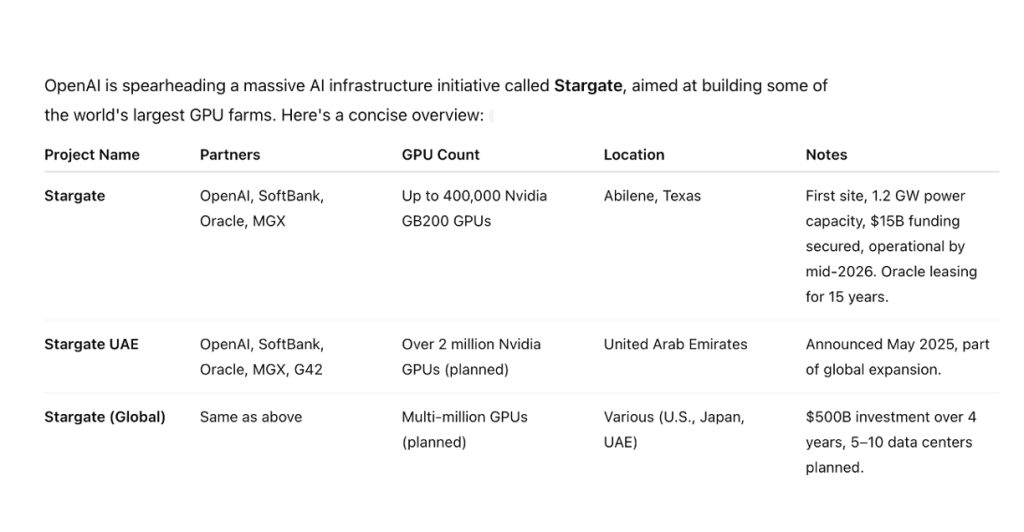
To achieve their sustainability goals, a more aggressive approach would be required. Here are some potential paths forward:
- Enhanced Reporting Transparency: develop more transparent reporting when it comes to Scope 3 emissions. Scopes 1 and 2 take lots of reporting space compared to Scope 3. PPAs, RECs and Carbon Credits offer an easy path to net-zero, especially for companies with large cash reserves
- Exploring Energy-Efficient AI Models: it has been proven that larger models trigger emerging features and this leads me to believe that, in the short term, model sizes will only increase. In the AI world bigger is better!
- Increased Investment in Carbon Removal: double down on carbon removal technologies, like direct air capture
- Supply Chain Engagement: step up collaboration with (and support) suppliers to reduce emissions
- Advocating for Green Policy Support: use influence to advocate for policies that support renewable energy infrastructure, carbon pricing, and sustainable supply chains.
The Enterprise AI Dilemma
As organizations increasingly deploy AI systems, they face a fundamental tension between innovation and sustainability. The promise of increased productivity through AI must be balanced against environmental commitments. Companies are discovering that alternative models like DeepSeek may offer more energy-efficient solutions, though this comes with its own considerations around geopolitics and compliance.
Conclusion
Tech giants face significant challenges, especially with the impact of Scope 3 emissions and the growing demand for datacenters. While tools like PPAs and RECs provide temporary solutions, they may lack the depth needed for lasting sustainability. The high compute and storage demands of LLMs require more energy-efficient models and significant investment in carbon removal. Energy use should be a key factor in LLM model selection.
The path to decarbonization demands greater transparency, strong supply chain collaboration, and advocacy for green policies. As organizations increasingly deploy AI systems, they face a fundamental tension between innovation and sustainability. The promise of increased productivity through AI must be balanced against environmental commitments.
Rainmakers SG helps small and medium businesses design safe and scalable Agentic AI systems that provide immediate ROI!