AI Ethics in Government Regulation and Control

Why do some Governments ban DeepSeek but allow ChatGPT? The answer isn't just about security, it's about power!
The AI industry is experiencing an unprecedented arms race, with OpenAI leading in the US and DeepSeek emerging as China's powerful challenger.
As competition intensifies, so do concerns about national security, data privacy, and regulatory oversight.
Recently, the Australian government banned DeepSeek on federal devices, citing national security risks. A spokesperson for the Home Affairs Department stated, "The government takes a risk-based approach to ensure that government devices are secure and used appropriately." This move reflects broader worries about potential foreign surveillance and data misuse. Similarly, South Korea's data protection authority has suspended new downloads of DeepSeek, citing issues with its third-party services and privacy policies. The regulator found that DeepSeek mishandled user data and failed to comply with personal data protection regulations.
Several other countries have taken action against DeepSeek over security and data privacy concerns. Italy blocked DeepSeek over data protection issues, while Taiwan, Canada, and India banned it on government devices. The US has imposed similar restrictions across various federal agencies, and New York State cited privacy and censorship risks. European regulators are also reviewing its policies, indicating potential future actions. These measures reflect global concerns about DeepSeek's data handling and security implications.
Are governments applying the same restrictions to ChatGPT and Claude, or is there a double standard? A deeper look suggests inconsistencies in their approach. If security and privacy are the main concerns, shouldn't all chatbots be held to the same standards? This blog examines the geopolitical, economic, and ethical factors shaping these decisions.
The ban’s implications for Small and Medium Businesses (SMBs).
The ban has a direct impact on both enterprises and SMBs. The impact can be summarized as follows:
- Increased Compliance Requirements: SMBs working with government agencies or in regulated sectors must ensure their AI tools comply with new security standards. This may involve auditing current systems and adopting approved alternatives to avoid potential penalties. Organizations often require AI Consulting services to navigate these complex compliance requirements effectively.
- Data Privacy Concerns: The ban highlights the importance of data security. SMBs need to reassess their data handling practices, especially if they previously used tools like DeepSeek, to ensure customer information remains protected.
- Operational Disruptions: Transitioning away from DeepSeek may cause short-term disruptions. Employees accustomed to its interface and capabilities will need time to adapt to new platforms, potentially affecting productivity.
- Strategic Re-evaluation: The situation prompts SMBs to re-evaluate their technology strategies. Investing in locally developed or internationally recognized AI tools with transparent data practices may become a priority to maintain trust and compliance.
While the ban aims to protect national security, it also serves as a wake-up call for SMBs to prioritize data security and compliance in their operations.
DeepSeek: A Security Threat or a Convenient Target?
Governments justify banning AI models like DeepSeek on national security grounds, citing risks of foreign adversaries using them for intelligence gathering, disinformation, or economic manipulation. These concerns are real and stem from deep-rooted perceptions of China shaped over decades:
- China's history of data collection: western governments have long been wary of Chinese tech companies such as Huawei and TikTok, fearing they could funnel user data to Beijing. DeepSeek, as a Chinese AI model, is viewed through that lens.
- Lack of transparency: critics argue that DeepSeek does not disclose its data storage policies or whether it shares information with the Chinese government, raising red flags for privacy advocates.
- The role of state influence: unlike OpenAI, which operates within a democratic framework with legal checks and balances, Chinese AI firms exist under a system where the government wields considerable control over private enterprises. This leads to concerns that DeepSeek may be subject to government influence.

Yet, the DeepSeek models are open-weight and anybody can download the model parameters, under a non-restrictive MIT license, at least for what DeepSeek-R1 is concerned. DeepSeek stands out in terms of transparency and openness compared to OpenAI:
- DeepSeek's papers are highly detailed, making them actionable for other teams. Their pre-training paper on DeepSeek-V3 clearly explains efficiency gains, training techniques, and modifications at low-level CUDA layers of NVIDIA GPUs.
- DeepSeek-R1 introduces a new reasoning model, which is groundbreaking in the AI space, as it openly revealed chain-of-thought reasoning rather than just providing summarized answers. Unlike OpenAI's o3, which summarizes reasoning, DeepSeek-R1 actually shows the full step-by-step breakdown of thought processes.
A Double Standard in AI Regulation?
Many AI chatbots have come under scrutiny for collecting user data, and ChatGPT is no exception to the controversy. In March 2023, Italy temporarily banned ChatGPT over GDPR compliance concerns, stating that OpenAI failed to properly inform users about data collection and lacked adequate age verification systems. The ban was lifted in April 2023.
OpenAI has faced backlash for training its models on user conversations, leading to privacy risks. Several lawsuits challenge OpenAI's use of copyrighted data for training ChatGPT. The Intercept (Feb 2025) sued over news article misuse, with a judge allowing the case to proceed. The New York Times (Dec 2023) accused OpenAI and Microsoft of unauthorized content use. These cases highlight concerns over AI training and copyright violations. On February 11, 2025, a Delaware federal court issued the first major decision concerning the use of copyrighted material to train AI. The case is Thomson Reuters Enterprise Centre GMBH v. ROSS Intelligence Inc. Thomson Reuters, the owner of Westlaw, sued Ross for using Westlaw headnotes, summaries of key points of law and case holdings, to train a competing, AI-driven legal research search engine. The court granted Thomson Reuters’s partial motion for summary judgement on its direct infringement claim and rejected Ross’s fair use defense.
However, it cannot be ignored that Australia, South Korea, Italy, the US, and India have taken different approaches to restricting ChatGPT. Australia has not imposed a nationwide ban but some organizations have internal restrictions. South Korea has advised caution in using ChatGPT within government settings, though no formal ban exists. The US has not banned ChatGPT at a federal level, though some agencies and schools have imposed restrictions. India has advised government employees against using ChatGPT for official work due to data security concerns but has not enforced an outright ban.
The examples indicate that the AI industry does not operate in a vacuum, it is deeply intertwined with global power struggles. The US, Australia, and South Korea have strong security alliances, and their tech policies often align strategically. Some argue that banning Chinese AI models is less about privacy and more about limiting China's technological influence.
Final Thoughts: Fairness vs. Geopolitics
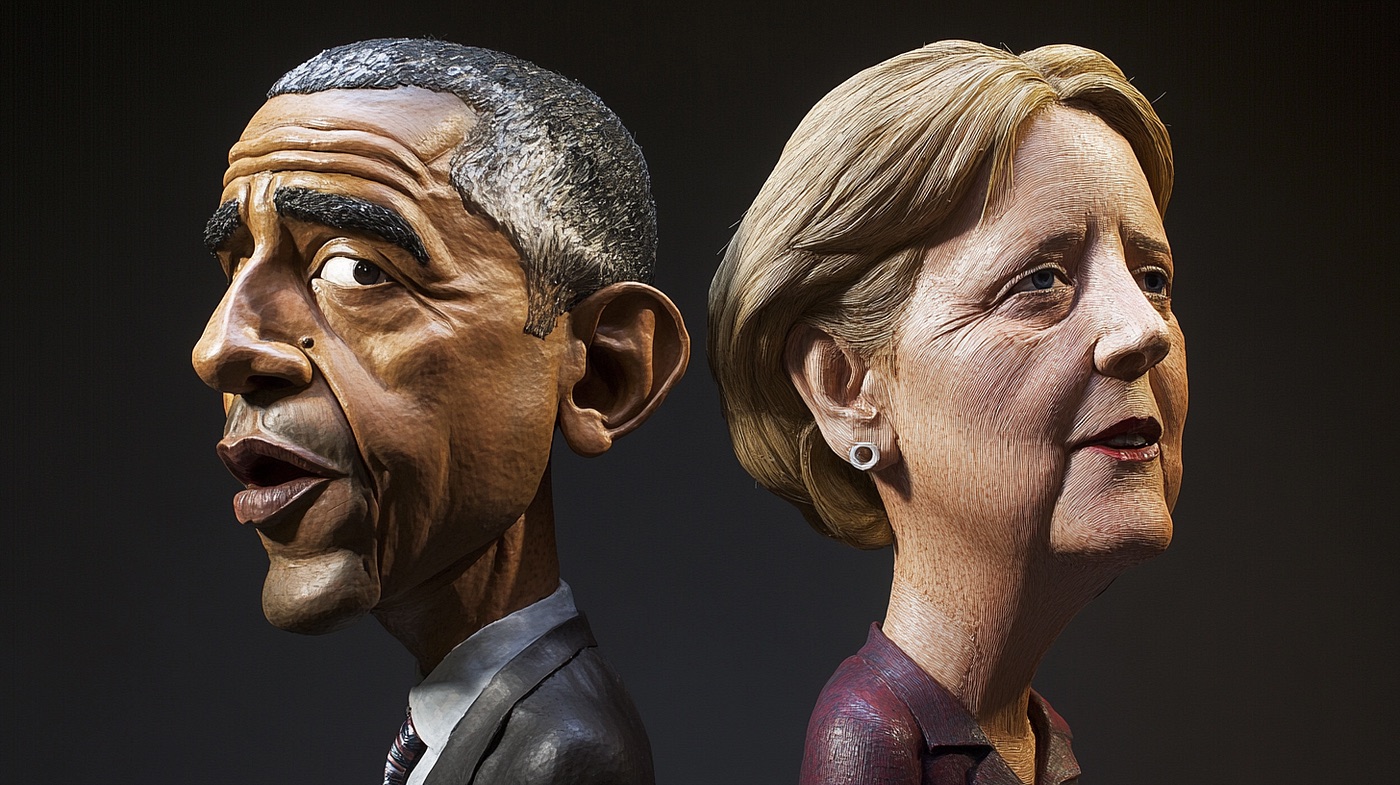
In 2013, whistleblower Edward Snowden revealed that the U.S. National Security Agency (NSA) had tapped German Chancellor Angela Merkel's cell phone. The disclosure highlighted that even close allies were subject to US intelligence surveillance. The case proves digital espionage isn't one-sided. If DeepSeek is banned over security risks, shouldn't ChatGPT and Claude be banned in the same way?
The AI arms race is escalating, and governments are taking decisive action to regulate foreign AI models. While security and privacy are valid concerns, the selective enforcement of these policies raises questions about fairness and geopolitical motivations. If the ultimate goal is to create a safe and transparent AI ecosystem, then AI regulations must be universally applied, not selectively enforced based on national allegiances.
The world needs a balanced approach where security concerns are addressed without stifling competition or fostering technological nationalism. Until then, the AI arms race will continue, not just as a battle for innovation but as a struggle for control over the future of intelligence itself.
For all your AI needs contact Rainmakers SG!