AI & The End of Coincidence
As technology advances, we've become increasingly reliant on data and AI Agents to guide our decisions. Whether it's apps suggesting what music to listen to or algorithms determining our news feeds, our lives are being shaped by patterns and predictions. While this can make life more efficient, it also strips away some of the randomness and the associated emotions that makes life interesting.
For example, in the world of sports, young athletes are now often scouted based on their physiological data. If a child's VO2 max, a measure of aerobic fitness, is below a certain level, they might not even get a chance to pursue a sport at a high level. This data-driven approach might identify top talent, but it also sidelines those who might have risen to greatness through sheer passion, hard work, team work, or the right opportunity at the right time.
Another example is job recruitment. Companies increasingly use AI Agents and tools to screen candidates based on their resumes and online profiles. While this streamlines hiring, it risks excluding individuals whose unique talents or unconventional experiences don't align with algorithmic criteria. Consequently, companies might miss out on creative thinkers who bring valuable diversity.
The Magic of Coincidence
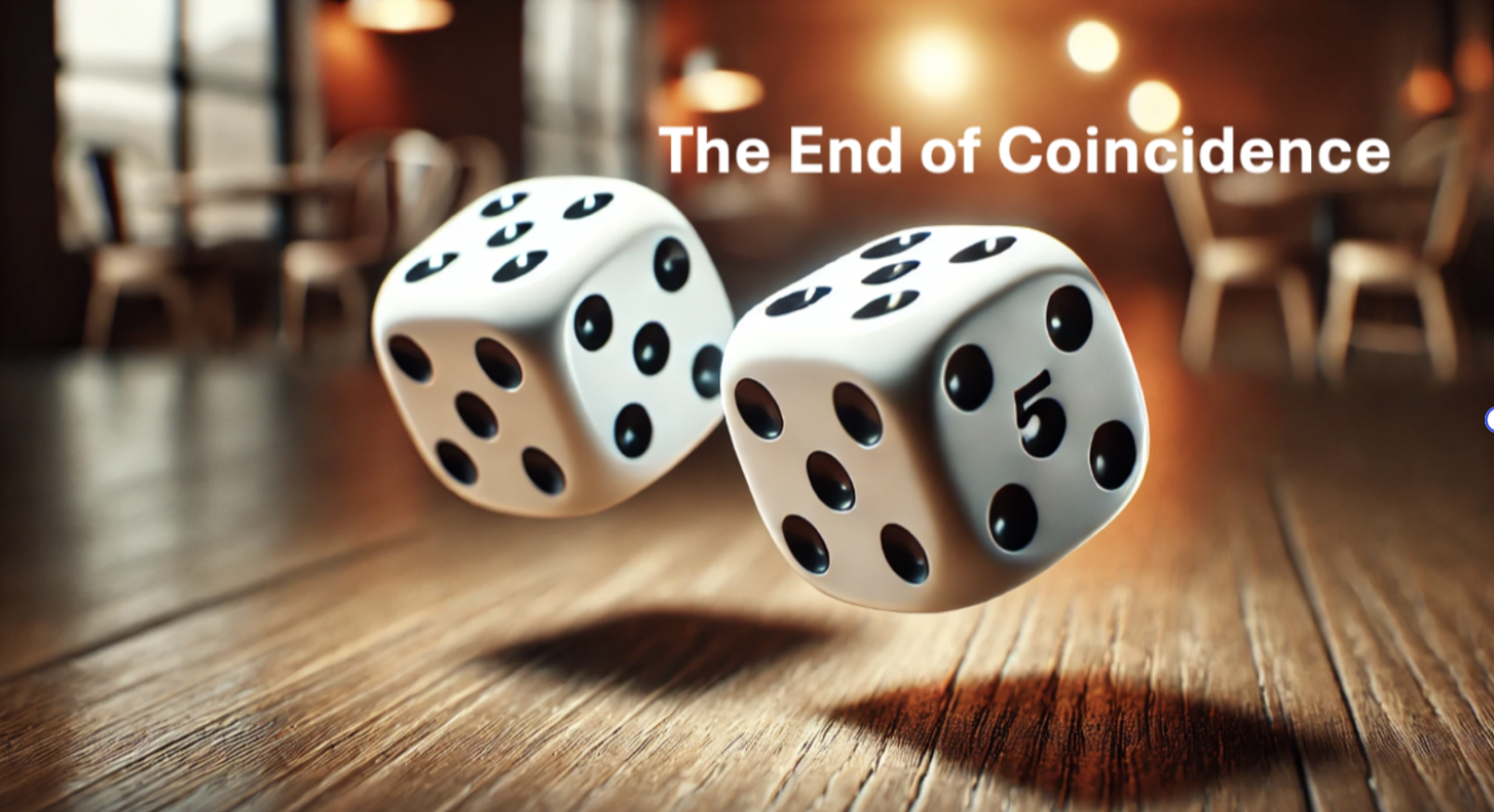
What we gain in efficiency, we may lose in spontaneity. Imagine a world where every decision is optimized by AI Agents and data, you always know the quickest route, the healthiest meal, and the most profitable career move. But where is the room for unplanned, magical moments? The detour that leads to an unexpected adventure, the spontaneous trip that becomes a cherished memory, or the random act of kindness that changes your day?
Coincidence introduces unpredictability, keeping us engaged with life. It's what turns a casual conversation into a lasting friendship or a wrong turn into a hidden gem. Without these moments, life risks becoming a series of calculated steps, predictable but devoid of surprise, and yes boring!
Consider the world of entrepreneurship. Many successful startups began not as calculated ventures, but as spontaneous ideas born from coincidence. Airbnb, for example, started when its founders rented out air mattresses in their apartment during a conference. This unplanned move led to the creation of a billion-dollar company that transformed the hospitality industry.
Embracing the Unexpected
As we delve deeper into a world shaped by AI Agents and data, it's crucial to remember the value of coincidence. While data can guide us, it's the unplanned moments, the coincidences, that often bring the most joy. These are the stories we tell, the memories we cherish, and the experiences that shape us.
Even in business contexts where sales and marketing automation optimize customer interactions for maximum efficiency, there's still value in leaving room for unexpected connections and serendipitous discoveries that no algorithm can predict. Organizations investing in AI should consider not just how to optimize processes, but how to preserve space for human creativity and spontaneous innovation.
So, as you navigate your day, make space for the unexpected. Take a different route home, say yes to an impromptu invitation, or engage in a random conversation. Embrace the randomness life offers, for it's in these moments of coincidence that we often find our greatest joys. After all, it's not predictability but surprises that make life truly worth living.
The Balance Between Optimization and Discovery
Understanding this balance becomes particularly important as organizations develop AI strategies, that affect both operational efficiency and innovation capacity. The challenge is implementing AI systems that enhance productivity without eliminating the unexpected insights that drive breakthrough thinking.
Moreover, as AI transforms how we look at software we must consider how these changes affect our daily interactions with technology and information discovery.
It's important to recognize that while AI Systems or AI Agents appear intelligent, and conscious, they operate on patterns and predictions rather than true understanding. This distinction becomes crucial when deciding how much autonomy to give AI Agents in shaping our experiences and choices.
As AI continues to evolve and become more sophisticated, the question of preserving human spontaneity and serendipity becomes increasingly important. The goal should be creating AI systems that enhance human potential rather than replace human judgment and discovery.
Rainmakers SG helps small and medium businesses design safe and scalable Agentic AI systems that provide immediate ROI!