AI Agents Are Killing SaaS: What Comes Next for Software?

In recent months, statements from industry leaders like Satya Nadella (Microsoft), Mark Zuckerberg (Meta), and Marc Benioff (Salesforce) have set the world abuzz. Their shared vision suggests that the era of traditional SaaS (Software as a Service) is nearing its end, giving way to a future dominated by autonomous AI Agents. The shift to Agentic AI systems is poised to profoundly impact Independent Software Vendors (ISVs) and their access to funding. Growing anxiety among ISVs, small and big, will lead many ISVs to integrate 'AI, AI Agent or Agentic AI' into nearly all aspect of their marketing messaging.
The impact on software development and software developers should not be underestimated. The productivity of above average software developers will increase significantly, while the future of below average developers is highly uncertain at least, and it is happening as we speak.
The statements
Satya Nadella's remarks encapsulate this transformative shift: "business applications as we know them will collapse in the agent era." At its core, this prediction reflects the idea that traditional software applications like Excel, essentially a user interface layered over database operations, is redundant in a world where AI Agents can interact directly with databases and perform tasks autonomously.
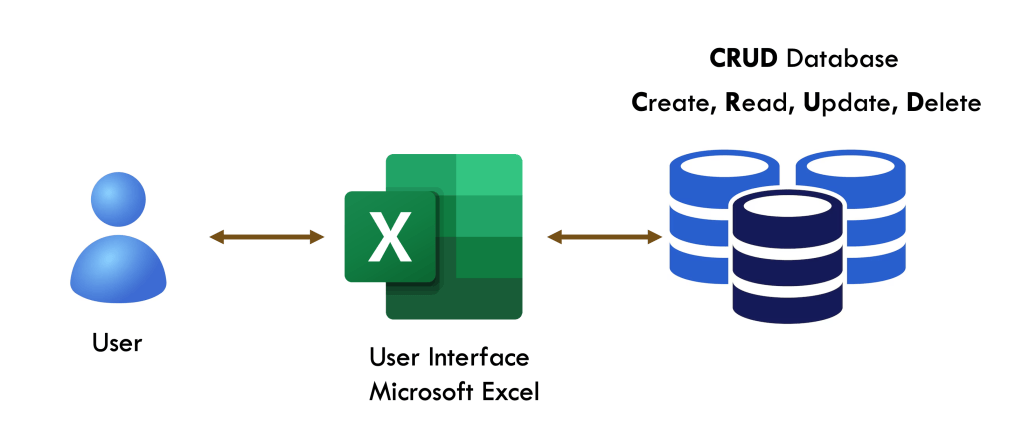
When asking ChatGPT (OpenAI) or Claude (Anthropic) to analyse an Excel sheet, Claude efficiently processes the natural language input and generates the right narrative including visuals.
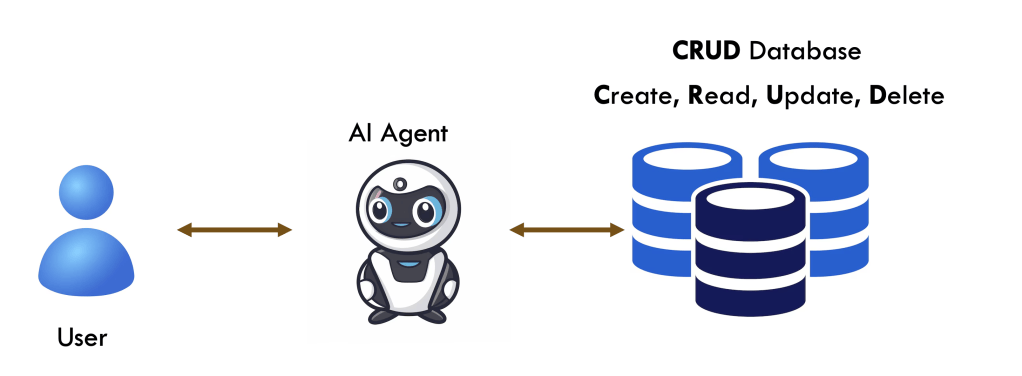
The AI Agent intelligently determines the optimal approach to deliver the best response to the prompt and write their own code to handle complex business logic. Claude's response to: "Analyse attached excel sheet." includes narrative and visuals.

Microsoft Copilot for example, can be viewed as an AI Agent for work organization, assisting with tasks, productivity, and decision-making through AI-driven capabilities. Eventually, Microsoft's Copilot will collaborate with non-Microsoft Agents in a larger Agentic AI system. Inter-agent communication is not yet mainstream but it will gain traction in fields like multi-Agent systems, and AI-driven automation. Google recently released the Agent2Agent (A2A) protocol, an open standard facilitating A2A communication.
Marc Benioff echoed similar sentiments, citing a 30% productivity boost at Salesforce thanks to AI. Benioff highlighted their decision to halt software engineer hiring in favour of leveraging AI tools like AgentForce. This reflects an industry-wide acknowledgment that AI Agents can not only automate routine tasks but also reduce the need for large software development teams.
Mark Zuckerberg added another dimension, predicting that this year, AI will be capable of mid-level engineering tasks. This reinforces the vision of a near-future workforce where AI significantly augments or even replaces human developers for many tasks.
In my opinion, and to put it bluntly, the productivity of above average software engineers will increase significantly, while below average software engineers will be encouraged to choose another profession.
The Foundations of this Transformation
The shift from traditional SaaS to AI Agents is rooted in several converging technological and societal trends:
Advancements in AI and Machine Learning: Large language Models (LLMs) like OpenAI's GPT, and Meta's Llama, have demonstrated unparalleled capabilities in understanding and generating human-like responses, as well as writing and executing code.
Agent-Based AI Systems: Tools like Microsoft's Copilot and ChatGPT's function-calling capabilities have begun to demonstrate the power of AI Agents, interacting with multiple systems and databases seamlessly. These agents can perform complex tasks, such as generating reports, automating workflows, and even creating applications in real time. Commercial AI automation platforms gaining popularity are Make.com and n8n. It literally takes just a couple of hours to create and run Agentic workflows
Cloud and API Ecosystems: Modern SaaS platforms have increasingly relied on APIs for interoperability. AI Agents leverage these APIs to transcend traditional application boundaries, accessing and manipulating data directly.
Cost Efficiency: AI-driven automation drastically reduces costs associated with software development, deployment, and maintenance. By reducing the reliance on human developers, organizations can reallocate resources toward strategic initiatives.
User Experience Evolution: Traditional interfaces, like spreadsheets or CRM dashboards, are being replaced by conversational and command-driven interactions. For example, instead of manually navigating a CRM system, users can simply ask an AI sales Agent to retrieve specific customer insights and execute tasks like sending personalized emails through sales automation workflows.
Implications for the SaaS Industry and ISVs
The SaaS and Software Applications industry will face major disruption. Anticipate terms like 'AI Agents' and 'Agentic AI' to gain prominence as the transition accelerates, particularly among ISVs looking to attract funding.
End of Traditional Applications: SaaS applications, as they exist today, are largely graphical interfaces facilitating interactions with underlying databases. With AI Agents, these interfaces become redundant. Users will describe desired outcomes (e.g., "generate a sales forecast based on last quarter's data"), and the Agents will handle the backend processes seamlessly.
Restructuring Software Development: AI Agents capable of writing, testing, and deploying code in real time will redefine the role of software engineers. Developers may shift from creating applications to training and finetuning AI models, or orchestrating Agent-based systems. Organizations will need comprehensive AI Training programs to help their development teams adapt to this new paradigm where AI code generation becomes a core competency rather than traditional coding. An example of an Agentic coding system is Cursor.
Ecosystem Changes: As AI Agents gain the ability to interact across multiple platforms and databases, the emphasis will shift toward ensuring secure, efficient data interoperability. Companies offering the best AI-optimized data systems and agent-compatible APIs will gain a competitive edge.
New Business Models: The monetization of agent-driven ecosystems will differ from traditional SaaS subscription models. Licensing access to proprietary AI Agents, tools, or specific datasets may become a primary revenue stream. Additionally, enterprise AI governance and compliance frameworks will emerge as essential services. Specialized AI consulting services will become increasingly valuable as organizations navigate this complex transformation and need expert guidance on Agentic implementation strategies.
Workforce Evolution: The role of human employees will pivot toward creative, strategic, and oversight functions. While AI handles repetitive and computational tasks, humans will focus on innovation, policy setting, and higher-order problem-solving. Sales and marketing automation and customer engagement strategies will increasingly rely on AI Agents that can personalize interactions at scale.
The timeline for this transformation away from SaaS is already unfolding. Microsoft's Copilot and Salesforce's AgentForce are early examples of Agent-driven systems. Meta's vision of AI engineers by 2025 underscores how imminent this shift is. Industry experts predict that by the end of this decade, Agent-based AI systems will dominate software interactions, both in enterprise and consumer spaces.
However, while the potential of autonomous agents is vast, there are hurdles to overcome:
- Data Security: Ensuring secure access and manipulation of sensitive data by AI Agents will be critical. Organizations must understand the IP implications of AI deployment.
- Ethical Considerations: Decisions made by AI Agents must align with organizational values and compliance standards.
- Job Displacement: While new roles will emerge, transitioning the workforce to this new paradigm will require reskilling initiatives.
- Technology Trust: Building user trust in AI Agents for critical tasks will be a gradual process.
Rainmakers SG helps small and medium businesses design safe and scalable Agentic AI systems that provide immediate ROI!